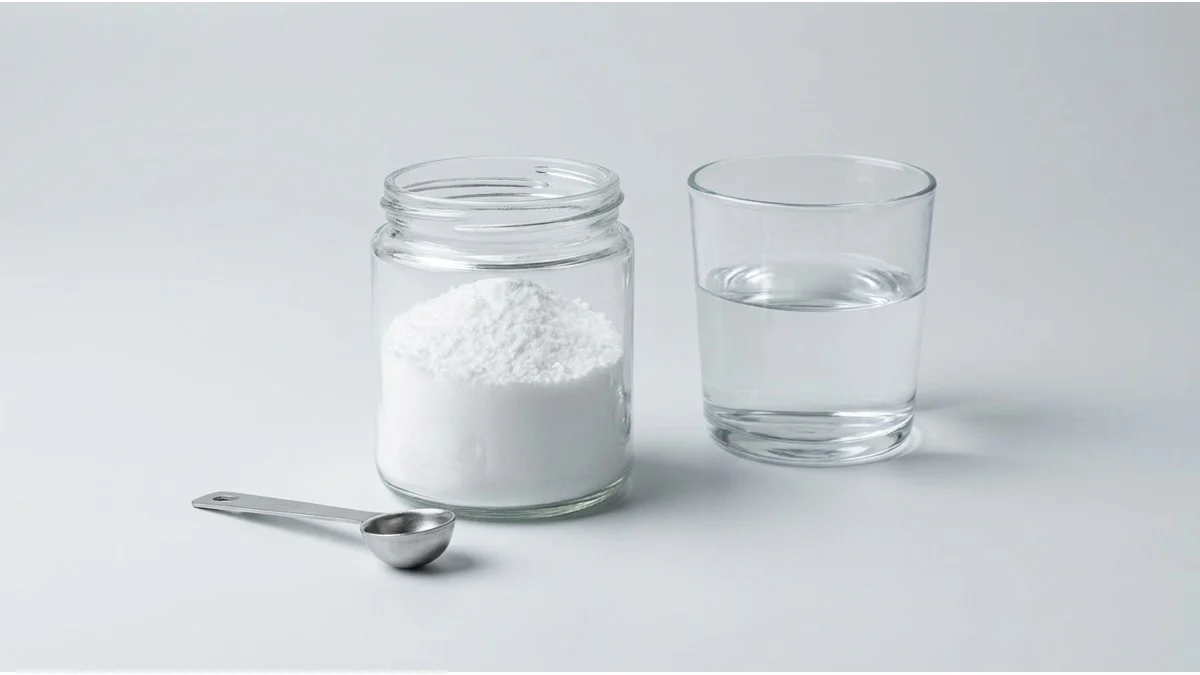
Starting a supplementation journey may seem complex given the countless options and theories available in the sports nutrition market. For those seeking to optimize physical performance, the classic choice most recommended by experts is creatine monohydrate. Considered the best creatine for beginners due to its extensive supporting literature, it acts directly in providing energy for rapid, intense muscle contractions.
This guide was structured using a methodology of clinical data analysis and systematic reviews of high scientific relevance. Our goal is to impartially clarify the physiological mechanisms, dosage strategies, and limitations of this compound, ensuring that your start in daily supplementation is guided by safety and solid results. Unlike other supplements, creatine monohydrate has an accumulation of evidence spanning decades of research, including long-term studies confirming its safety and efficacy. For the beginner, this represents a significant advantage: the possibility of starting a protocol based on robust data, not passing fads.
How Creatine Monohydrate Works: ATP and Cellular Resynthesis
Phosphocreatine and the Adenosine Triphosphate (ATP) Pathway
To understand the efficiency of creatine, it is necessary to analyze cellular energy metabolism. The main energy currency of the human body is adenosine triphosphate (ATP). During high-intensity, short-duration exercises, such as weightlifting or sprints, ATP loses a phosphate group to release energy, converting into adenosine diphosphate (ADP).
It is at this moment that phosphocreatine stored in the muscles comes into play. It acts as a quick source of energy for muscle cells, readily donating a phosphate group to resynthesize ADP back into active ATP. Regular supplementation maximizes these intramuscular stores, allowing sustained maximal efforts for a few additional seconds before fatigue sets in. This mechanism is particularly relevant for modalities involving explosive power and strength, such as bodybuilding, CrossFit, sprints, and high-intensity team sports.
Endogenous Synthesis: The Roles of Glycine, Arginine, and Methionine
Although it is consumed through supplementation or foods such as red meat and fish, creatine is also endogenously synthesized by the human body. This production occurs mainly in the kidneys and liver, using three specific precursor amino acids: glycine, arginine, and methionine.
However, natural synthesis produces only about 1g to 2g of creatine per day, an amount that merely maintains basic metabolic functions and is insufficient to completely saturate the muscle tissue of physically active individuals. Therefore, supplementation becomes a strategic tool to raise muscle stores to levels that favor performance and recovery.
Main Benefits for Beginners: Performance, Muscle Mass, and Cognitive Function
Hypertrophy and Intracellular Water Retention Explained
The gains in strength and muscle tone associated with creatine occur through multifactorial pathways. A comprehensive review analyzing 35 clinical trials, highlighted by Columbia University Irving Medical Center, shows that regular creatine supplementation reliably supports muscle protein synthesis and functional strength when integrated with consistent resistance training protocols.
One of the most visible initial effects is intracellular water retention. Unlike subcutaneous water retention, which causes a swollen or flabby appearance, intracellular hydration draws water specifically into the sarcoplasm of the muscle cell. This process not only increases the physical volume of muscle mass in a healthy way, but also improves the state of cellular hydration, creating a favorable anabolic environment that signals the growth of new fibers.
Another important point is that creatine can be combined with other nutritional strategies, such as adequate carbohydrate intake, which enhances muscle creatine absorption by increasing insulin levels. However, for most beginners, simply taking it daily with water is already sufficient to achieve the desired effects.
The Brain Connection: Cognitive Benefits of Creatine Supplementation
Although the traditional focus is musculoskeletal tissue, the brain has an extremely high metabolic demand and also relies on the ATP-phosphocreatine system for energy homeostasis. Recent scientific evidence shows that creatine supplementation plays a neuroprotective role and improves cognitive function, helping to reduce mental fatigue induced by sleep deprivation or strenuous cognitive tasks.
Furthermore, creatine is not a stimulant. It does not act on the central nervous system like caffeine, but rather by providing an energy substrate for muscle and brain cells. This makes it a versatile option that can be used at different times of the day without interfering with sleep quality or causing chemical dependence.
Dosage Strategies: How to Take Creatine Monohydrate for Beginners
Demystifying the Loading Phase: 20g Daily vs. Consistent Low-Dose Protocols
One of the biggest dilemmas for those having their first contact with the supplement is the consumption strategy. Traditionally, the so-called “loading phase” is recommended, which consists of ingesting 20g daily, divided into 4 doses of 5g, for the first 5 to 7 days, followed by a maintenance phase of 3g to 5g daily.
However, modern science has demystified the mandatory nature of this strategy. The Harvard Health Publishing portal notes that a standard daily dose of 3 to 5 grams is perfectly safe and highly effective for filling and maintaining phosphocreatine stores over time. While the rapid loading protocol reaches maximum muscle capacity in approximately 7 days, consistent intake of 3g to 5g daily achieves exactly the same level of saturation in about 28 days, without the gastrointestinal discomfort associated with high doses.
The choice between the loading phase and the gradual dose should take into account the individual’s lifestyle. Those who want faster results or who will start a competition in a short period may opt for loading, provided they are aware of the potential gastrointestinal discomfort. On the other hand, the gradual dose is milder and equally effective over a period of approximately four weeks.
How Much Creatine per Day per KG: Customizing Your Dosage
For beginners seeking to avoid generic recommendations, personalization based on body mass is the most accurate approach. The gold-standard calculation in the scientific literature recommends: recommended daily dose = 0.1g per kg of body weight.
Thus, an individual weighing 70 kg will perfectly benefit from a daily dose of 7g of pure creatine monohydrate to accelerate saturation and optimize results. A person weighing 80 kg can use 8g daily, while a 60 kg individual can start with 6g. This personalization ensures that supplementation is efficient without waste.
Special Considerations: 10g Dosage for Larger Individuals
Individuals with greater body volume or significant fat-free mass require proportional adjustments. According to clinical guidelines published by University of Rochester Medicine, people weighing close to or above 200 pounds, approximately 90 kg, can benefit from a continuous maintenance dose of up to 10g daily to ensure complete saturation of their muscle stores.
Best Practices for Beginners in Creatine Supplementation
- Consume creatine daily, including on rest days, to keep muscle stores continuously saturated.
- Dissolve the dose in at least 200 ml of water or another beverage to optimize absorption and reduce the risk of gastrointestinal discomfort.
- Maintain adequate hydration throughout the day, especially during intense workouts and in hot climates.
- Track your results over 4 to 8 weeks to assess individual response to supplementation, adjusting the dose only if necessary.
In addition to these practices, it is essential to consider the overall dietary context. Creatine does not replace a balanced diet and a well-structured training program. It works as a physiological enhancer, but the final results depend on training consistency, adequate protein and carbohydrate intake, and proper rest.
Scientific Nuance: Analyzing Contradictory and Neutral Studies
2025 UNSW Sydney Research on Lean Mass Variation
In compliance with transparency and methodological rigor guidelines, it is crucial to highlight that the response to creatine can present individual variability. A relevant neutral study published by UNSW Sydney in 2025 revealed significant statistical fluctuations and variations in direct fat-free mass gains in certain groups of individuals.
This finding demonstrates the existence of individuals called “non-responders,” whose natural creatine stores are already close to the maximum limit due to genetics or a diet rich in meat. Therefore, although the substance is highly effective for the vast majority, beginners should maintain realistic expectations and understand that genetic factors influence the rate of response to the supplement.
Safety Profile and Potential Initial Side Effects
Mitigating Gastrointestinal Discomfort and Osmotic Changes
For those trying the supplement for the first time, questions arise about potential adverse effects. Creatine monohydrate is widely safe for healthy individuals, with no causal relationship to renal or hepatic dysfunction in people without pre-existing conditions.
However, mild gastrointestinal disturbances, such as nausea or intestinal cramps, may occur if the user consumes an excessively high dose at once, especially during the accelerated loading phase, or uses too little water for dilution. Because creatine has osmotic properties, it draws water into the intestinal lumen if not properly dissolved, which can cause episodes of mild diarrhea. It is recommended to increase daily fluid intake to completely mitigate these symptoms.
Selecting the Best Creatine for Beginners: Pure Monohydrate vs. Alternatives
Why Pure Micronized Creatine Monohydrate Remains the Gold Standard
In the market, there are several chemical variations, such as creatine HCL, nitrate, or ethyl ester. Despite promises of better absorption from these more expensive patented forms, none have scientifically surpassed the effectiveness of traditional pure creatine monohydrate.
The micronized version undergoes a physical process that reduces particle size, considerably facilitating dissolution in water and reducing the chances of residue at the bottom of the glass or gastric discomfort. Furthermore, it is ideal for both male and female audiences seeking tone and strength without adverse subcutaneous retention.
Synergistic Supplementation: Integrating Creatine with Essential Minerals
To enhance performance and muscle health, beginners can integrate creatine with synergistic micronutrients. Understanding the absorption differences between magnesium glycinate and citrate can help in choosing the best recovery micronutrients to support muscle relaxation and neuromuscular signaling in a complementary way to the creatine protocol.
Usage Protocol
| Protocol | Daily Dosage | Time to Saturation | Risk of Side Effects (GI) | General Recommendation |
|---|---|---|---|---|
| Rapid Saturation (Loading) | 20g (4 doses of 5g) for 5 to 7 days | ~ 7 days | Moderate to High | For those who need immediate aesthetic results. |
| Gradual Saturation (Recommended) | 3g to 5g (or 0.1g/kg) continuously | ~ 28 days | Minimal / None | Ideal for beginners and people with sensitive stomachs. |
| Dosage for High-Weight Individuals | 10g continuously | ~ 28 days | Low | Recommended for athletes above 90kg. |
Frequently Asked Questions about Creatine Monohydrate for Beginners
1. Can I take creatine monohydrate as a beginner?
Yes. Creatine monohydrate is the safest and most researched sports supplement in the world, being ideal for beginners who practice resistance or strength training. Its efficacy is widely documented in the scientific literature.
2. What happens after 1 month of creatine?
After 4 weeks of daily use, with doses of 3g to 5g, muscle phosphocreatine stores become completely saturated. It is expected to observe an increase in physical strength, better recovery between exercise sets, and a slight increase in muscle volume due to healthy intracellular water retention.
3. Which type of creatine is best for beginners?
Pure creatine monohydrate, preferably micronized, is the best choice. It has the largest amount of evidence of effectiveness, safety, and the best cost-benefit compared to other formulas, such as ethyl ester or creatine HCL.
4. Is it worth using creatine as a beginner?
Yes. Even if you are at the beginning of your training journey, creatine helps accelerate muscle strength gains and optimize cellular energy regeneration (ATP), which favors consistent progress in training loads.
5. What is the ideal daily creatine dosage for beginners?
The recommended standard dosage is 3g to 5g per day, or 0.1g per kg of body weight. For individuals above 90kg, doses of up to 10g daily can be beneficial to ensure complete saturation of muscle stores.
Conclusion: Next Steps for Safe and Effective Supplementation
Creatine monohydrate for beginners remains one of the supplements with the best cost-benefit ratio and safety in the scientific literature. By understanding the cellular mechanisms, personalized dosage strategies, and potential side effects, the user can make informed and realistic decisions.
Consistency is more important than the speed of saturation: a daily dose of 3g to 5g, combined with structured training and adequate hydration, is already enough to reap the benefits over time. If you are a beginner and considering supplementation, consult a healthcare professional or nutritionist to evaluate your individual needs. A clinical evaluation can identify possible contraindications and help define the most appropriate strategy for your profile. To further optimize your protocol, use our interactive tool to calculate the exact dosage of creatine monohydrate based on your body weight and training goals.
This article is for informational purposes only and is not a substitute for professional medical advice, diagnosis or treatment. Always consult a qualified healthcare provider before changing your diet, starting a supplement or altering any treatment.
Conflict of interest: The author and medical reviewer of this article report no financial relationship with any brand mentioned. Product recommendations are made independently of any commercial arrangement. Leia nossa política editorial.